
Agriculture: More Than Food, More Than the Bush
As published in the Brisbane Club magazine, Oct-Nov 2026 edition
When many Australians think about agriculture, they think about the food on their plate. While food production remains our core purpose, modern agriculture contributes far more to Australia's economy, innovation and future than many people realise.
The agriculture supply chain sits at the centre of a vast ecosystem of industries that employ hundreds of thousands of Australians across both regional and metropolitan areas. At Australian Country Choice (ACC), the people who contribute to our success extend far beyond those working directly with livestock production or beef processing. Our business relies on professionals spanning aviation, transport, logistics, manufacturing, technology, engineering, finance, sales and marketing. It is a reminder that modern agriculture is not simply a farming industry; it is an integrated supply chain industry connecting paddocks to consumers around the world.
Excitingly, our industry is undergoing one of the most significant technological transformations in its history.
Today, Australian agriculture is increasingly driven by data and technology. Across the country, producers and processors, are using satellite imagery, artificial intelligence, sensors, automation and advanced analytics to make better decisions, improve sustainability and increase productivity.
Autonomous drones are now being used for mustering livestock, monitoring water infrastructure, checking fences, assessing pasture conditions and conducting livestock surveillance across vast areas that would previously have required many hours of labour. Digital tracking systems provide unprecedented visibility throughout supply chains, while data-driven genetic selection continues to improve animal performance, animal welfare and sustainability.
Autonomous equipment and robotics are increasingly common, with technologies ranging from self-guided equipment through to automated feeding, monitoring and environmental management systems. The reality is that modern agriculture often has more in common with a technology business than many people would expect.
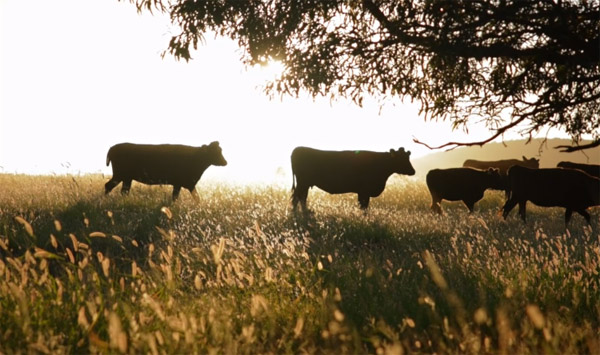
Agriculture's contribution also extends far beyond food.
Most Australians are surprised to learn how many products they use every day that originate from livestock processing. Cattle contribute valuable materials to industries including healthcare, beauty, renewable energy and manufacturing.
Collagen derived from cattle is used extensively in wellness and cosmetic products. Pericardium tissue is used in life-saving bioprosthetic heart valves. Leather continues to provide a durable and sustainable material for furniture, automotive upholstery, footwear and consumer goods.
Other co-products are utilised in feed ingredients that support poultry, aquaculture and pet food industries, ensuring every part of the animal is responsibly utilised and value added. Increasingly, biofuels produced from livestock processing feedstocks are helping support the transition towards lower-emission transport solutions, including renewable diesel and sustainable aviation fuel.
There is nothing wasted - the industry's ability to utilise the whole animal reflects a broader commitment to efficiency, sustainability and circular economy principles.
As Queensland continues to grow, stronger connections between regional communities and Brisbane will become even more important.
Regional Queensland produces much of the food, fibre and resources that underpin our state's economy, while Brisbane provides critical access to capital, talent, research, infrastructure and global markets. Neither succeeds without the other.
The future prosperity of Queensland will depend on maintaining strong links between our regions and our capital city, ensuring investment, innovation and opportunity flow in both directions. We need regional communities to remain vibrant and attractive places to live and work, while also helping metropolitan Australians better understand the industries that support their lifestyles and economic prosperity.
For young Australians considering their future, agriculture offers opportunities that are broader and more exciting than ever before.
The industry needs people who enjoy working outdoors and in factories, but it also needs software developers, engineers, salespeople, data analysts, marketers, scientists, financial professionals and business leaders. Careers exist both on the tools and off the tools, in regional communities and major cities.
Perhaps most importantly, agriculture gives people the opportunity to be part of solving one of humanity's greatest challenges: producing more food, fibre and energy for a growing global population while using fewer resources and continuously improving environmental outcomes.
It is an industry built on innovation, resilience and purpose.
Agriculture has always been essential to Australia's success. What is increasingly evident is that its future will be just as much about technology, sustainability and innovation as it is about farming itself.
Australian agriculture is helping to feed the world, power our economy, drive innovation and solve some of the world's greatest challenges. The future of agriculture will be built by people who can think differently, embrace technology and solve complex problems. For those prepared to take on that challenge, the opportunities are great … and you are most welcome at ACC!
SHARE ON: